How Hot is Too Hot for Your Chest Freezer’s Outside Walls?
Introduction
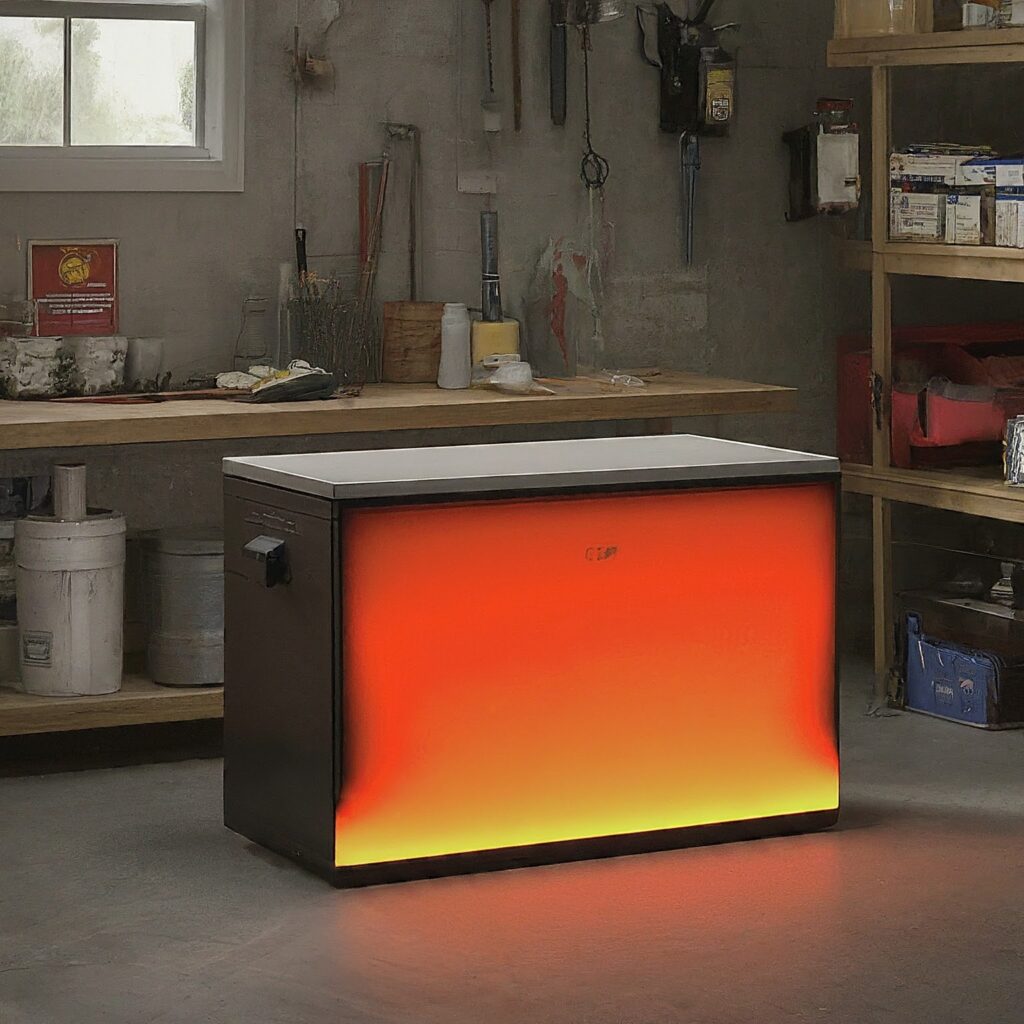
One of the most common types questions about chest freezers-whether they are being used for a DIY cold plunge or food storage- is about the temperature of the outside walls. It is normal for them to feel warm or hot to the touch. But is this a problem? How hot is too hot?
This article will go show you (simply) how a chest freezer works, discuss normal and unusual temperature ranges, and provide tips for maintenance and troubleshooting.
How a Chest Freezer Works
A chest freezer takes heat from the objects inside of it and dissipates heat in one of two ways:
- the outside walls, or
- coils on the back outside of the unit.
If you don’t have coils on the back outside, the coils are inside the exterior walls. Depending on the model, these coils can be on one, two, three, or all four exterior walls. They lid will never have coils running through it.
The drawing below shows a simplified process of how a chest freezer works.

Walls or other objects (boxes, cabinets, etc) too close to the chest freezer’s exterior walls make the compressor run longer, less efficiently, and reduce its life span.
Maximum Normal Temperature
While the exact temperature of the exterior walls can vary depending on a number of variables, it is not uncommon for them to be up to 30°F (16.7°C) warmer than the ambient temperature.
For example, if your chest freezer is in a room that is 70°F (21°C), the external walls could reach 100°F (37.8°C) under normal conditions. Check your owner’s manual for more information about the temperature of the outer walls.
If a chest freezer is hotter than expected on the outside, there are a few things for you to check before you call a certified technician.
Incorrect Setup or Equipment
- No Seals or Liner: If you did not seal the seams or install/apply a liner, or if you did not follow the best practice recommendations (ex. using silicone to seal the seams without installing a removable liner), water can seep into the interior walls and begin to damage the coils or equipment. Sometimes there is obvious rust or leaks.
However, it is very common for there to be no obvious signs of a problem until the chest freezer simply stops working. About 90% of chest freezer cold plunge setups that do not follow best practices will leak, rust, corrode, or die in the first 12 months. During that time, the compressor is working harder.
Here are two best practice articles to check out:
Sealing the Seams:
https://chestfreezercoldplunge.com/sealing
Liner options:
https://chestfreezercoldplunge.com/4-liners - Bad Seal on the Lid Gasket: Ensure that any pump power cords, sensor wires, or ozone tubes being run between the lid gasket and the upper wall of the chest freezer do not leave a gap in the seal, which allows cold air to escape and warmer air to get in.
If you have a liner installed, make sure that it does not interfere with the seal. - Wrong Equipment: Pumps and other equipment can add external heat to your water, making the compressor work longer. Use best-practice equipment.
A Danner 1200 or 1800 are good pumps for most chest freezer cold plunges. You’ll still need a good canister housing and filter. Here are two Amazon affiliate links
https://amzn.to/42s6sUZ
https://amzn.to/3LFetQl
Kitchen use ozone generators need to be run significantly longer than an ozone generator designed specifically to be used with a chest freezer cold plunge setup. The longer you run your ozone generator, the more you put ambient heat into your chest freezer.
The JED 303 has been the gold standard for ozone generators in chest freezer cold plunges since 2019, and in most cases only needs to be run for 30 minutes once per day.
I’m an authorized reseller and happy to answer questions. You can find more info here:
https://chestfreezercoldplunge.com/product/jed303/
Simple Maintenance and Cleaning
Always unplug your chest freezer and let it cool off before performing maintenance.
- Poor Ventilation: Ensure there’s enough space around the freezer for air to circulate. Most models need at least 4-6 inches (10-15 cm) of space on all sides for proper ventilation. Ensure that the vent grill over the compressor area is not blocked or clogged.
- Dirty Equipment: If you have coils on the outside back of your chest freezer, over time, the coils can accumulate dust and debris, reducing their efficiency in expelling heat. Cleaning the coils can significantly improve performance. If you have dust on the exterior walls, or on the compressor or other equipment in the mechanics area, wipe it clean or use compressed air to remove it. Always unplug
- High Ambient Temperature: The higher the ambient temperature, the harder the chest freezer has to work harder to keep your water cool, leading to higher surface temperatures. Try to keep the ambient temperature around the freezer as low as possible.
- Over-filled: If the chest freezer is filled with too much water it can make the compressor work harder and longer, which generates more heat.
- Frequent or Long Openings: Frequently opening the freezer or leaving it open for long durations can cause the compressor to run more often, increasing exterior heat.
- Faulty Temperature Controller: A malfunctioning temperature controller can cause the freezer to run longer than needed (or continuously), generating excessive heat. Be certain that you are using the recommended equipment. I’ve used the same AquaLogic temperature controller since 2017 and it is still working fine.
InkBird has a budget model with and without wi-fi. Be sure to get the one with a silicone-covered tip that is suitable for submersion. I have two Amazon affiliate links here:
https://amzn.to/3DF2A6h
https://amzn.to/35tgbBR - Initial Chill-Down: After adding water, it can take as many as one to four (or more!) days for your chest freezer to chill the water to your target temperature. It depends on the volume of water, the starting water temperature, and your desired water temperature. Adding ice is recommended for the initial chill-down to save wear and tear on your chest freezer.
How much ice do you need? See my handy Ice-Bath Calculator here:
https://chestfreezercoldplunge.com/icebathcalc
Issues Requiring a Certified Technician
Technical issues might be caused by errors during manufacturing, damage during shipping, low quality equipment, aging equipment, or setting up your chest freezer cold plunges without following best practices.
- Faulty Compressor Fan: Some mechanics areas have a fan that circulates air over the compressor. If your chest freezer has a fan, make sure it is working.
- Refrigerant Leak: A leak in the refrigerant line can lead to poor cooling performance and excessive work by the compressor, resulting in overheating.
- Compressor Issues: Problems with the compressor can lead to it overheating. This not only affects its efficiency but can also make the freezer’s exterior very hot.
- Faulty Lid Gasket: If the seal on the chest freezer door is not airtight, it can cause cold air to escape and warm air to enter, forcing the freezer to work harder and potentially overheat. While this can be caused by cords, wires, or tubes as mentioned earlier, it could also be due to the hinges being defective or damaged during shipping.
- Electrical Problems: Issues with the freezer’s electrical components, such as the capacitor or relay, can lead to overheating. This can be dangerous and requires immediate attention from a professional.
- Blocked or Malfunctioning Fans: If the fan responsible for circulating air across the condenser coils is blocked or not working correctly, it can cause poor heat dissipation and overheating.
It’s best to first address any simple maintenance and cleaning tasks yourself, because doing so might resolve the issue without needing to hire a technician.
However, if your chest freezer cold plunge still feels hotter than it should, or if you suspect the problem might be technical, it’s safest to consult with a certified technician to diagnose and fix the issue properly. Regular maintenance and prompt attention to potential problems can help ensure your chest freezer operates efficiently and safely.