
Using the MarineLand Pump/Filter for Your Chest Freezer Cold Plunge

Keeping Your Water Clean
Three things are needed for clean water:
- Circulation
- Filtration, and
- Sanitation
One of the simplest and inexpensive ways to create circulation and filtration is to use a submersible aquarium pump and filter. The Marineland Magnum Polishing Pump and Filter worked well from 2018 up until around 2022. If you have one, and have filters for it, read on for tips, and watch the below video.
In 2023 we started getting frequent reports of
– quality issues with the replacement filters not fitting well, and
– supply issues – they were going out of stock for months at a time, and because the filters are proprietary, there are no suitable alternatives.
Because of these issues, I am no longer recommending the MarineLand pump and filter for DIY chest freezer cold plunges. I am recommending two options:
- If you would like to make a DIY pump and and filter with equipment you can find locally I offer plans on my website. The link is posted below throughout the article.
- If you prefer a DFW (Done-For-You) option, I recommend the Apex86 pump and filter setup. It has 100% positive reviews in from everyone in my Facebook group who has used it. I have an affiliate link here:
https://apex86.square.site/?ref=Richter
Sanitation Options
What sanitation options can be used with the MarineLand pump and filter?
The three most popular include:
- cholorine
- H2O2
- Ozone
See my two YouTube videos for more information about sanitation options:
https://www.youtube.com/watch?v=6wK6K1pIDI4
https://www.youtube.com/watch?v=9nCYBbLV58M
Many cold plunge owners previously paired their systems with the trusted JED 303 ozone generator until it was discontinued in December of 2025. Today, the ARC 50P ozone generator is the new gold standard companion for keeping water clean. I have an authorized reseller and you can find them on my website here:
https://chestfreezercoldplunge.com/product/arc-50p-ozone-generator/
Watch my YouTube Video First
Where to Buy
If you’d like to buy a MarineLand pump/filter, they are available on Amazon, and local and online pet stores. If you use my Amazon affiliate link your patronage helps me support the global cold plunge community- and my family and is greatly appreciated.
Replacement filters can be ordered here:
If you can’t find them on Amazon, check Chewys and Petco. The filters are proprietary and go out of stock frequently. The best solution that I recommend is building a DIY pump and filter.
https://chestfreezercoldplunge.com/product/diy-pump-and-filter/
Quick Tips
- You only need one if you have a chest freezer smaller than 15 cu ft (400 liters). If your chest freezer is larger than that, it is best to use two.
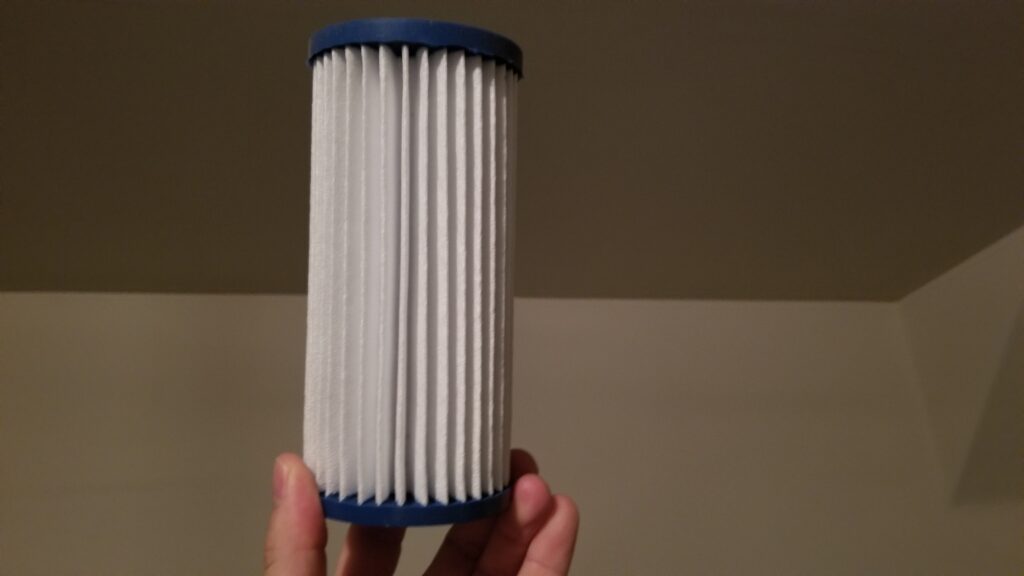
- Use the white pleated polishing filter.
- Discard the activated carbon
- Discard the media container (the black tube with the blue scruffy sleeve).
- Use the black foam gasket.
- For best performance, place the pump so that it sits flat on the floor of your chest freezer. Do not place it horizontally or at an angle. It can be placed on the compressor step, but ensure the entire pump is underwater.
- The most simple thing to do with the power cord is to run it over the top edge of the chest freezer so that the gasket on the lid closes over it.
- The filter should be cleaned or replaced at least once every 1 to 4 weeks, as needed. Do not go more than four weeks.
Pro Tips
- The included pleated filter is slightly too short to seal well on both ends and may let water bypass the filter. To be totally sure all water is filtered: attach the filter to the pump head first (it may be tricky to get over the lip when cold), omit the foam ring, and plug the bottom of the filter with this product: https://apex86.square.site/product/marineland-magnum-filter-plug/3
- The included pleated filter can be destroyed by even modest bleach solutions. The replacement filters are much more robust to sterilization with bleach.
Where to Place the Power Cord
If you would prefer to drill a hole in the lid to run the cord, search my YouTube channel for videos on how to do that. You will need to drill a hole large enough for the plug to fit through, use a gasket or cable pass-through to seal the top outside and bottom inside, and insulate the gap in between.
My book also provides details on several ways to do this.
You can pick up a copy here:
Which Filter to Use?
Use the pleated filter as shown in the video. Discard the biofilter with the blue spongey sleeve (it doesn’t work very well). Also, discard the activated carbon.
Safety
Always unplug the pump- and all other equipment- before getting into the water. Aquarium owners have reported shocks and dead fish.
Always unplug the pump before doing any maintenance or cleaning.
Always unplug the pump before pulling it out or putting it back in the water.
How Long To Run the Pump
Aquarium pumps are designed to run 24/7, and this is what I recommend for use in your chest freezer cold plunge. The only time to unplug it is before you get into the water and when doing maintenance.
Running your pump continuously helps keep the water temperature consistent in your cold plunge, increases the effectiveness of your sanitizer, and helps inhibit microbial growth.
Cleaning the Filter and Housing
- To clean the filter, pick off any hair and other debris. You can soak it overnight in a 1:1 solution of water and white vinegar or a 1:10 solution of bleach and water. I like to keep two or three replacement filters on hand and rotate them with the change. Rinse them well before putting them back into the canister housing.
- Wash the canister housing and other parts with water and mild dish detergent. Be sure to rinse everything before replacing it back into your cold plunge.
What to do if the Filter is Stuck in the Canister
The filter can swell due to chlorine or from manufacturing defects. If it gets stuck in the housing, you can use salad tongs to remove it. Another tip is to empty the water and let it dry out for a day or two, which should make it easier to remove.
Where to Find Replacement Filters
The replacement filters are proprietary and only made by one company. Since 2022 they have been going in and out of stock with increasing frequency and can be difficult to find. Check Amazon, Petco, Chewys, and your local pet and aquarium stores.
If you want to avoid this hassle, check out the DIY Pump and Filter Plans linked below.
Additional Cleaning Tips
These tips come from a mechanical engineer in our community who is awesome with all things DIY.
- Disassemble all pump parts and scrub with a brush in hot soapy water
- Soak the motor in hydrogen peroxide until it stops fizzing.
- Scrub all surfaces inside your tub with a brush too. Once a slime/biofilm forms, it protects the microbes from chlorine/ozone. Once you address the issue, clearing it up can still take a few days.
Dirty / Cloudy Water
The filter can only be cleaned so many times before it will no longer be effective. If you have cloudy water, and have cleaned the filter more than 3 – 4 times, the first thing to do is replace the old filter with a new one.
If the filter is still in good shape, read on!
Having cloudy/dirty water even with a good sanitation method and clean filter in place is a common problem that started getting reported in late 2021 or early 2022.
Most of the time it is due to an issue with the way the filter fits (or more accurately does not fit) in the canister.
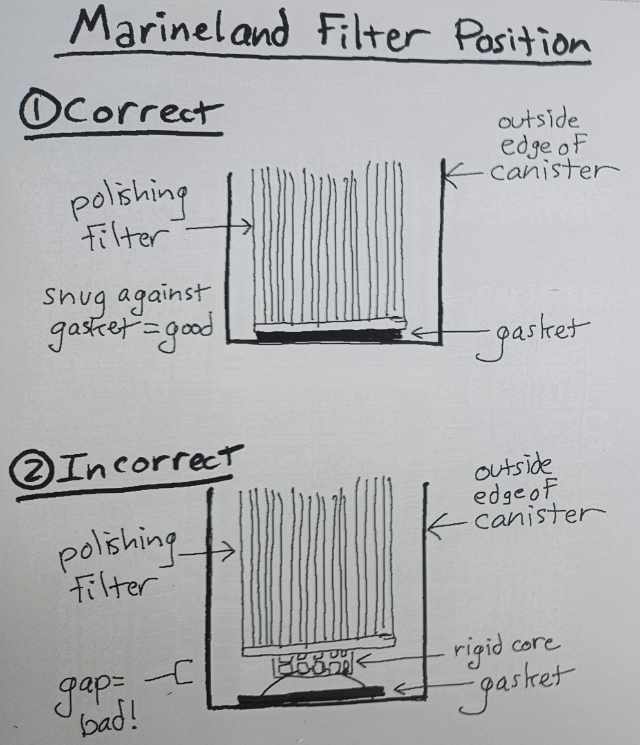
I have received many reports of this problem. The issue is that the filter is not sealing against the foam gasket that is in the bottom of the canister.
To determine if this is a problem, take apart the unit and firmly press the polishing filter into the motor housing. It should stay in place without being held. Attach the canister to the motor housing. Hold the unit up to a window or bright light and look at the bottom where the filter meets to dome. Is there a gap or does it firmly meet the gasket?
See the below picture.
If there is a gap, this will cause debris or sediment to recirculate into the tub instead of getting caught in the filter.
A solution can be found in the below section “Upgrades from an Engineer.”
Upgrades From an Engineer
Lars Remsen, a mechanical engineer in our community, created several upgrades to the MarineLand pump/filter. I appreciate his designs and ongoing contributions in our community.
Here is my affiliate link to his website. After you arrive, click the “Shop Cold Plunge” link.
https://apex86.square.site/?ref=Richter
If the rubber gasket needs to be replaced, buy the MarineLand Magnum Filter Plug.
What To Do If The Suction Cups Don’t Stick
If you have a DIY cold plunge with a submersible pump using suction cups to keep it in place, you might have noticed that they don’t stick very well, resulting in your pump moving around or floating up in the water.
Here are some creative solutions that people in my Facebook group have developed to keep their submersible pumps in place.
1. Dinner Plate
Suction cups will stick very well to a dinner plate, and the weight of the plate will keep it in place. 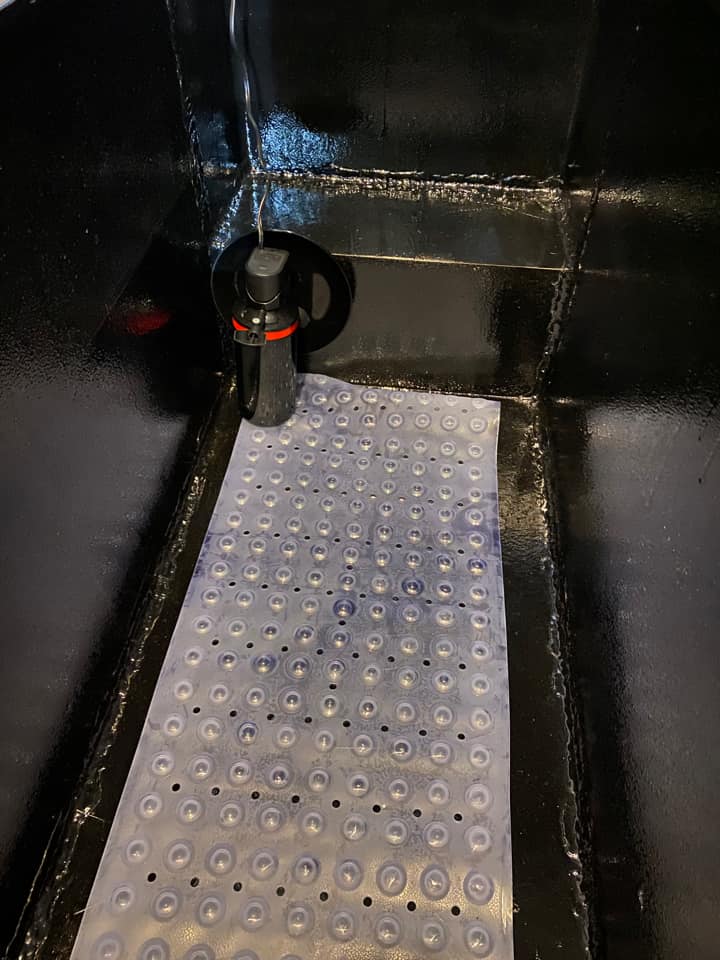

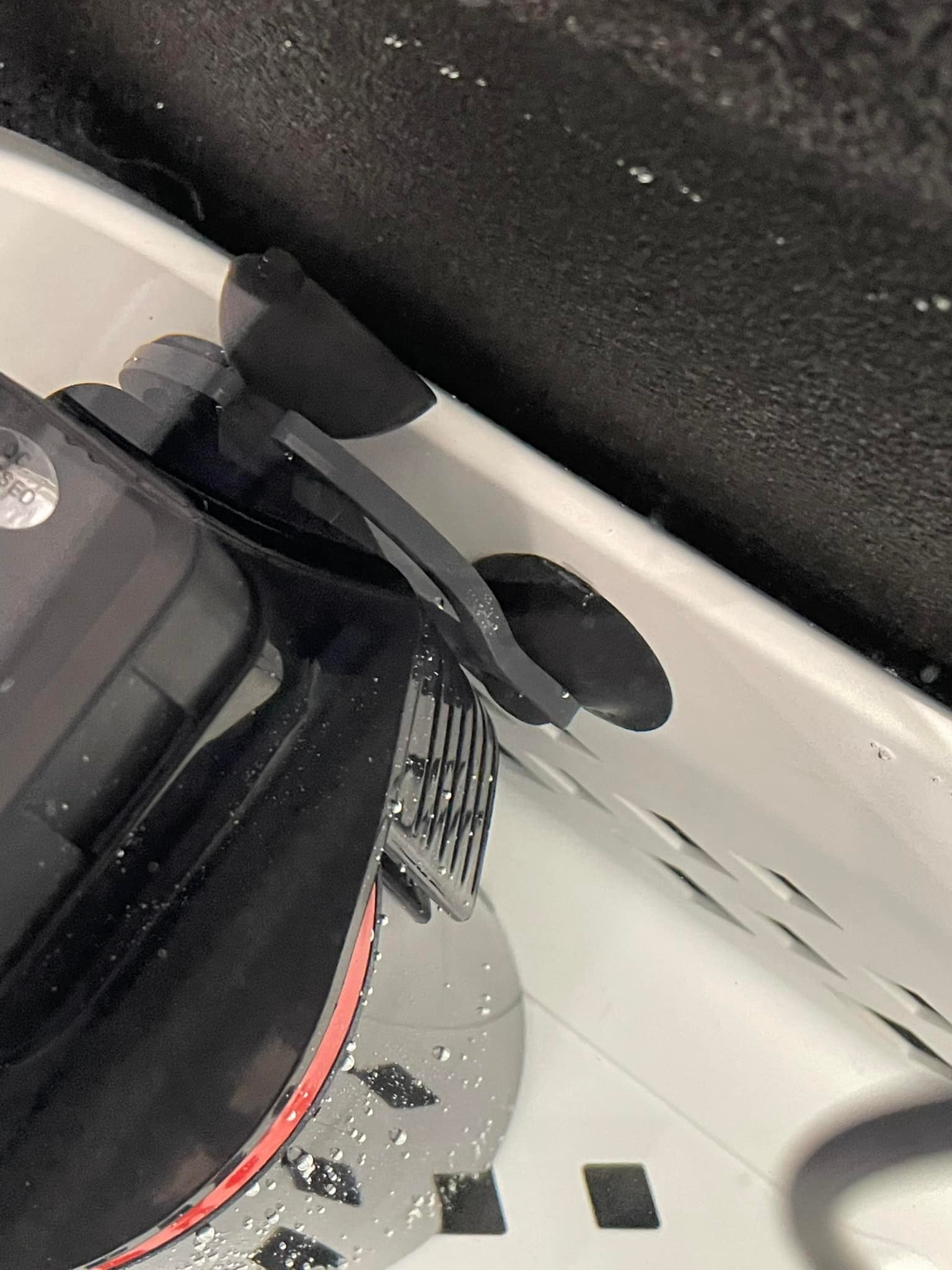
2. Chest Freezer Storage Bins
If the suction cups align with any part of the storage bins that came with your chest freezer, cut them to sit on the compressor step.
3. Adhere the Bracket
If you have a permanent liner, attach the bracket directly to the wall with an adhesive. A 2-part epoxy putty will be permanent. This application is non-critical, so you could also use silicone caulk, just make sure it has no additives. 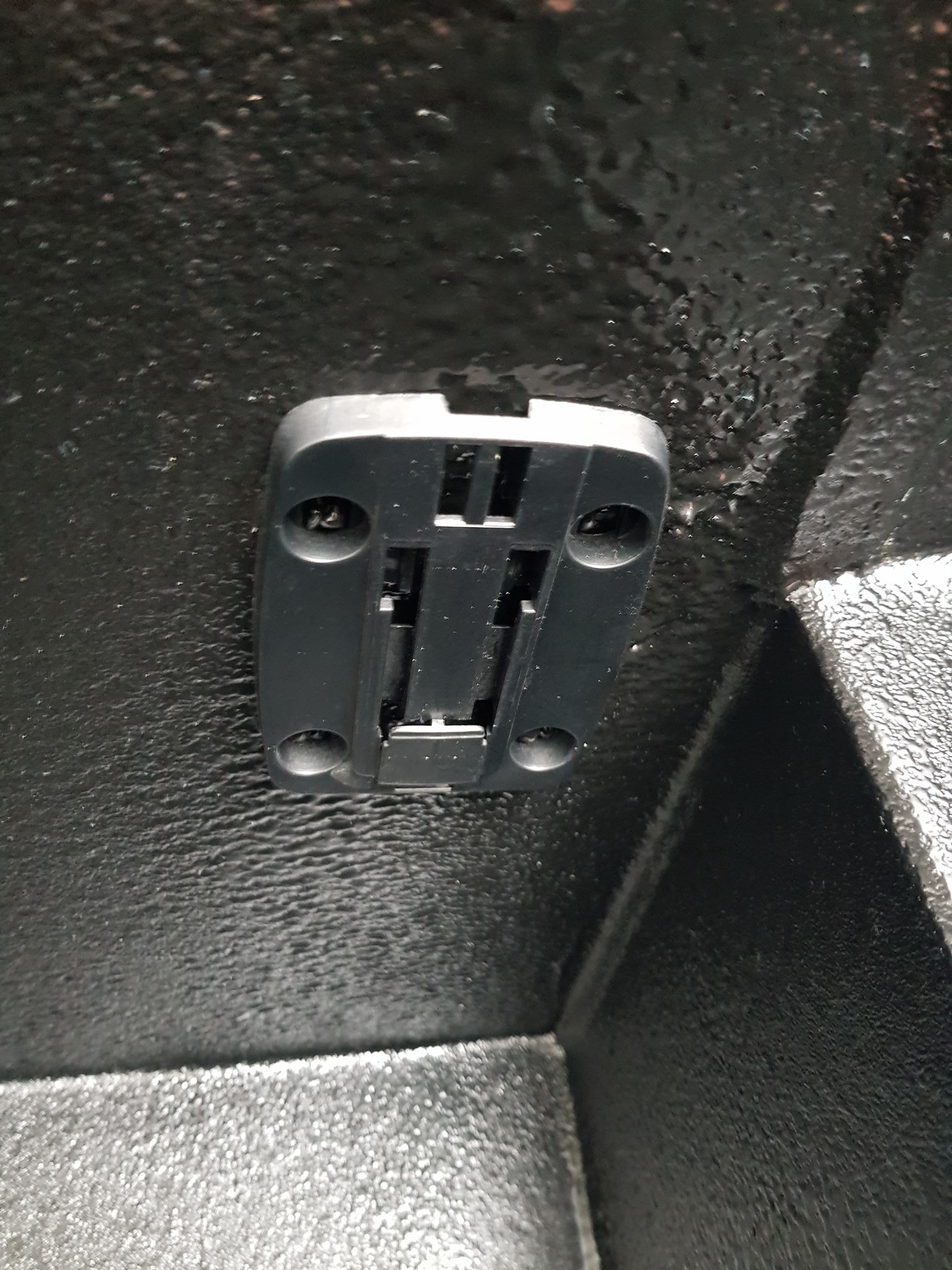
4. Magnets
Use two magnets. Adhere one to the chest freezer wall and the other to the bracket. This makes it very easy to remove the pump for cleaning. 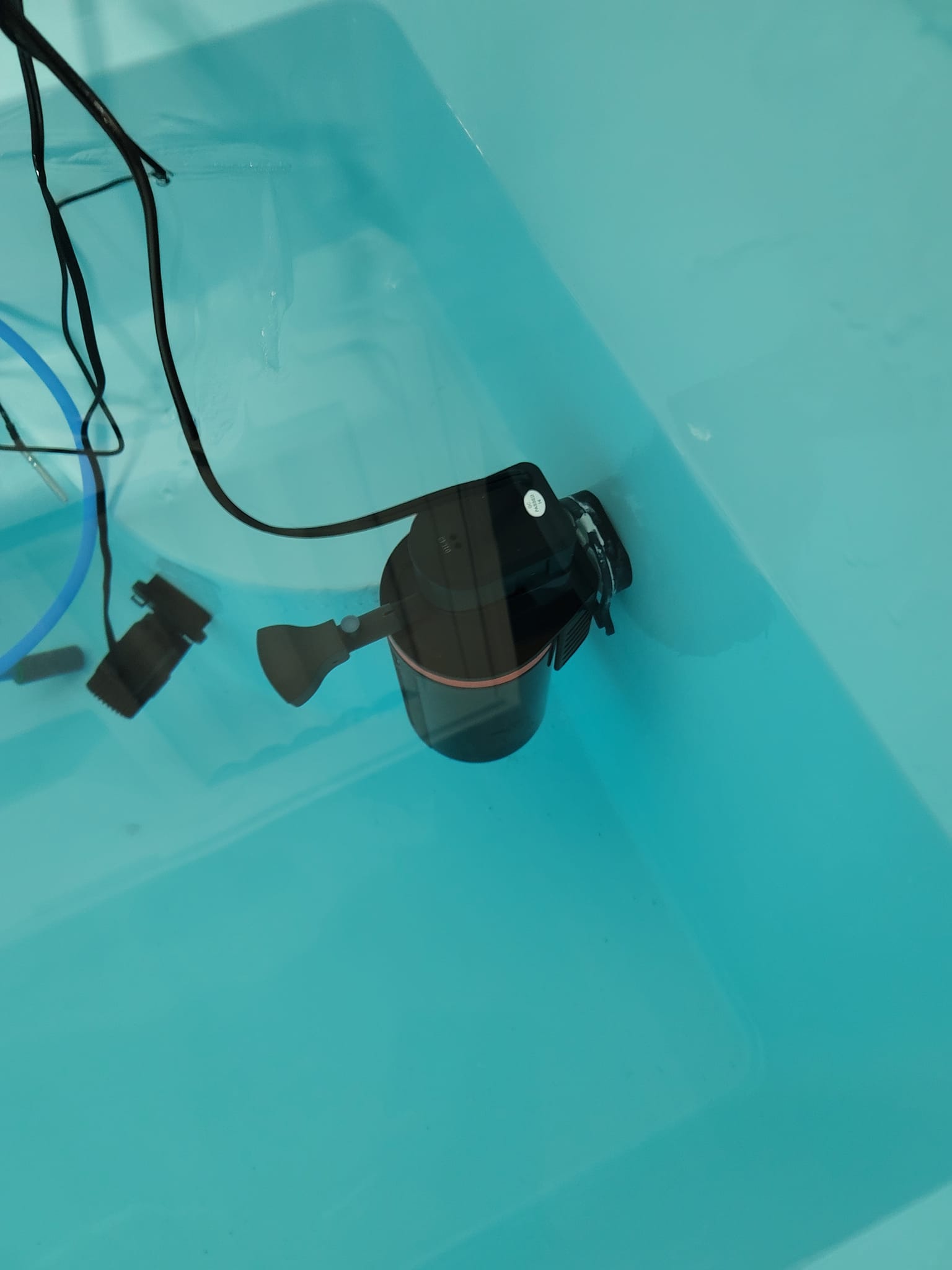

5. PVC Frame
Build a frame from 1-inch (2.5 cm) PVC pipe to hold the pump in place. Drill holes in one of the pipes to allow air to escape so it will stay on the bottom.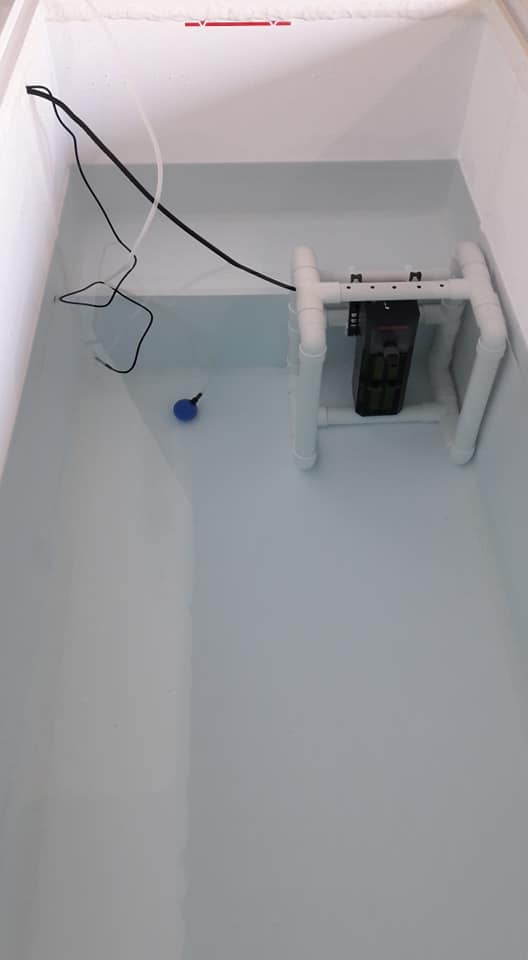
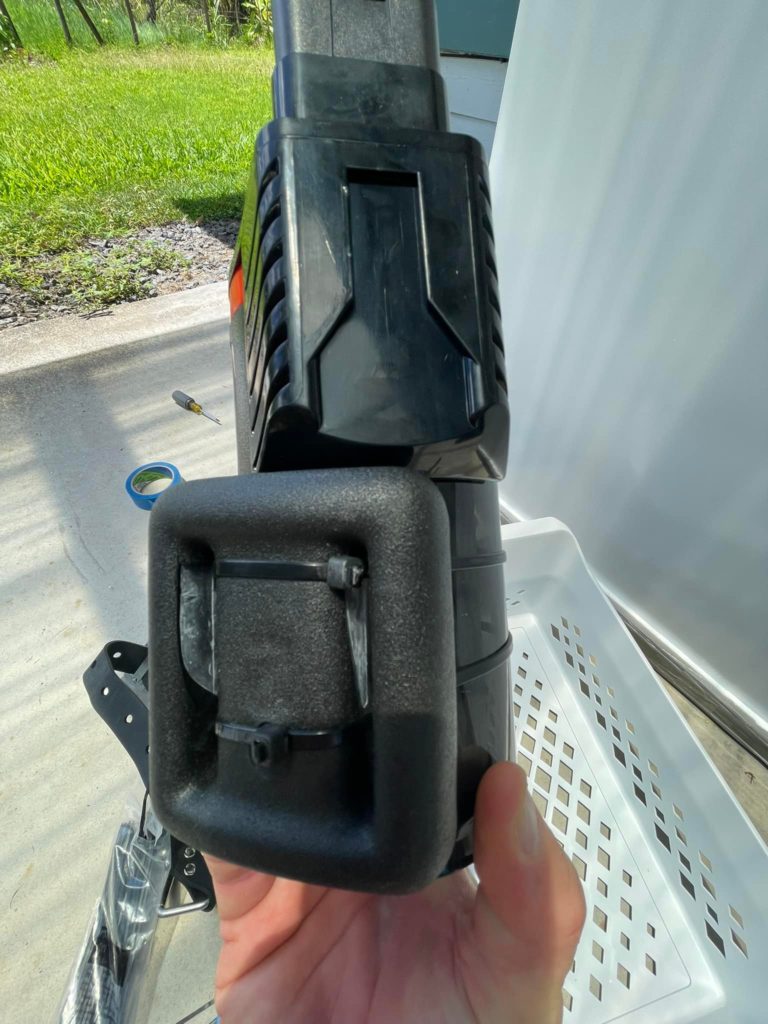
6. Dive weight
A light 3.5 lb (1.5 kg) dive weight attached with zip ties is a great solution.
Problems with the MarineLand pump and filter
Since 2017 there are a number of problems reported with the MarineLand pump and filter:
- It does not provide enough circulation, there are dead spots, or you want more circulation
- The replacement media does not fit well
- The filter can swell up and get stuck inside the canister
- The impeller gets clogged up too easily
- The replacement filters are out of stock at all retailers
- It only works on 120v and is not available in other countries.
The good news is that there is a solution, no matter where you live:
Other Aquarium Pumps / Filters
Other brands of submersible aquarium pumps and filters can be used, however, none that I have seen have the polishing filter. Most use either a blue scrubby material or biological filters, which do not work as well for our purpose because they are not fine enough to capture all of the sediment.

Build a DIY Pump and Filter Using Local Parts and Supplies
If you want a solution that works even better than the standard aquarium pump/filter combos, there is a way to make a DIY pump and filter from locally available parts. After four years of using a MarineLand Magnum Polishing pump and filter, I upgraded to a stronger pump and filter housing that uses standard replacement filters available from several companies.
MarineLand vs. DIY Pump & Filter
Here are ten reasons to consider upgrading rather than using the Marineland pump.
- Since 2021 there have been increasingly frequent supply chain issues, which makes it difficult or impossible to buy the Marineland or replacement filters sometimes. When you have a pump, filter housing, and filter media widely used in other industries (home improvement/ water filtration), equipment is available from more than a few different sources/manufacturers.
- The Marineland option is a lot less expensive. However, the price has fluctuated wildly from $49 to $115. Last I checked, it was $85 on Amazon. Replacement filters typically cost $9 – $10 each.
The DIY version will cost between $200 – $350 to put together with high-quality parts that will last a long time. Replacement filters can be found for around $6 – $7 when ordered in bulk (four to six per box). - We have frequent posts in my Facebook group about MarineLand pumps either arriving dead or breaking within a month. This alone is not a reason to avoid getting one. Every product that is mass manufactured is going to have breakdowns. Of course, people are more likely to post about problems.
The parts for the DIY version are simply higher quality and should be expected to have fewer issues. - There are quality problems with the MarineLand filters swelling up and being unable to be removed from the canister housing. Since the replacement filters for the DIY version are widely used for home water filtration, they are higher quality and less likely to have problems.
You can order products created by Lars Remson to solve these issues (see the above section “Upgrades From an Engineer) - The MarineLand filters are expensive and proprietary/non-standard. Only a MarineLand filter will work in that housing. No other company makes a polishing filter that size that can be used. Several companies make filters for the housing recommended in the DIY version, and because they are standard, they are all interchangeable.
- The circulation provided by the MarineLand is sufficient but not amazing. Yes, it worked fine for me for four years. But sometimes good is the enemy of great, and great can be the enemy of excellent. Better circulation helps inhibit the growth of microbes and keeps your water cleaner for a longer time. The DIY pump definitely provides better circulation.
- Chest freezers larger than 15 cu ft / 400 L need significantly more circulation and typically need two MarineLand pumps to keep the water clean. While I have not yet tested the DIY pump/filter on a larger chest freezer, I suspect it will work significantly better. However, another device, like a power head, might still be needed to prevent circulation dead spots.
- The Marineland pump only works on 120v. Most countries outside the US have 240v, which requires a step-down transformer, which will work but adds another $50 to the cost. At that point, you are getting close to the price of the DIY version. The DIY pump/filter can be made from parts available in almost any country.
- Some people prefer the idea of having a DIY option that can be made from or replaced with parts from many different manufacturers. Again, this is preference. You do you!
- Shipping prices + taxes + customs charges to other countries make the MarineLand even more expensive and make it a hassle to order replacement filters or parts.
BONUS Reason: It’s always great to have options!
Ultimately, figuring out what works “best” for you depends on your budget and personal preferences.
I advocate for finding solutions for many people and supporting those choices.
If you want the easy, less expensive option, get a MarineLand pump/filter. I have an Amazon affiliate link:
If you prefer the DIY option, you can probably figure it out from the picture of the plans. However, I have detailed instructions if you want to avoid some common mistakes and benefit from months of testing. They are offered with a “name your price” option.
$10 is suggested.
There is no upper limit if you are feeling generous or grateful.
Let me know if you have any thoughts/questions.
You can buy my plans here: